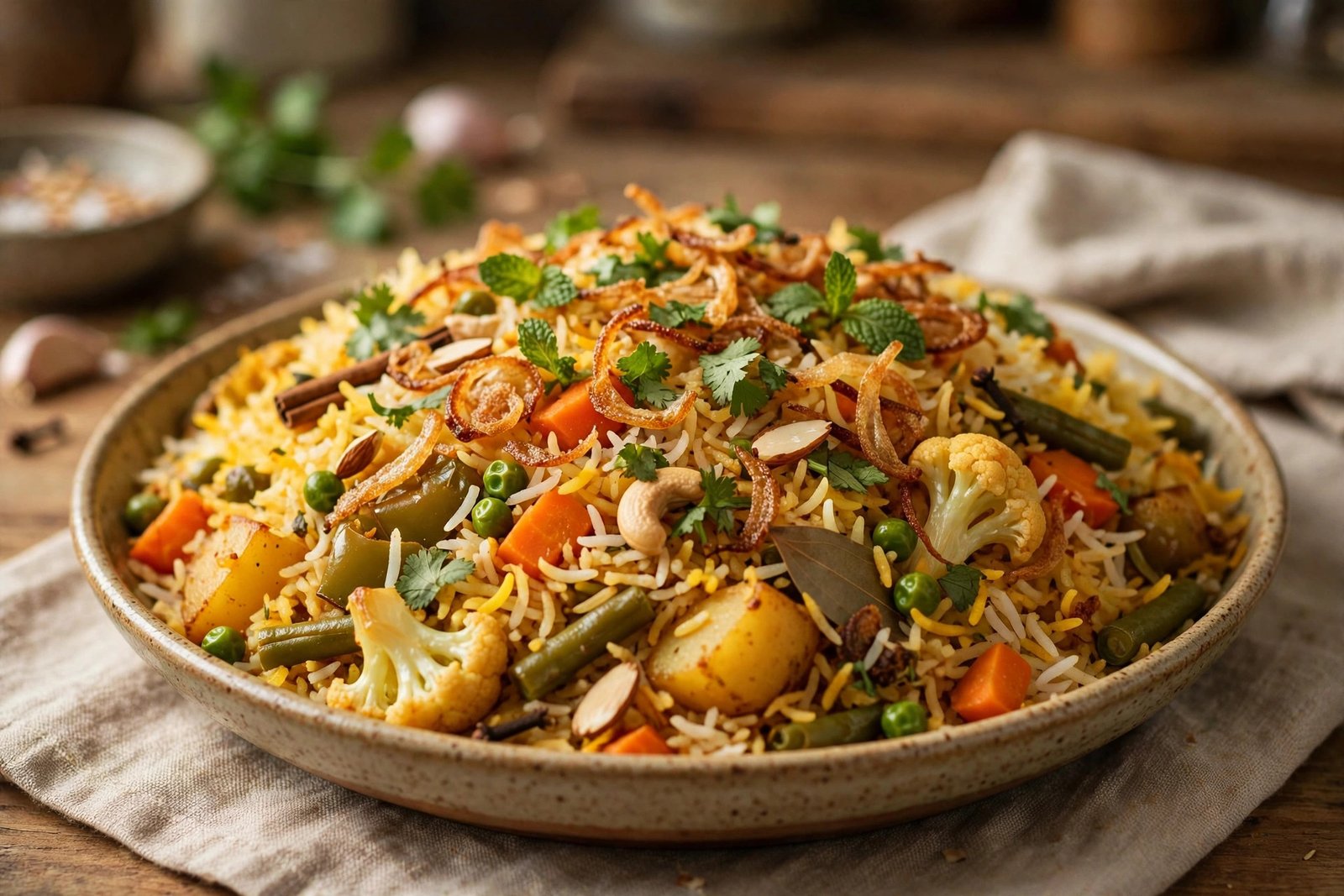
Vegetable biryani is a layered rice dish made with mixed vegetables, spices, fried onions and saffron, steamed together until the flavours meld. It is the meat-free answer to chicken biryani, and it stands on its own rather than feeling like a substitute, because the vegetables bring their own sweetness, texture and colour.
Make it for a family meal, a gathering with mixed diets, or a weekend lunch when you want something festive without meat. Allow about 90 minutes, with much of that time hands-off. You need a heavy pot with a tight lid, and a mix of vegetables that hold their shape during steaming.
Times and temperatures here are approximate home-kitchen guidance, not tested-lab results. Ovens, pans and stoves vary, so use sight, smell and touch alongside the clock.
Ingredients
Serves 6. Uses 500 g rice and about 700 g vegetables.
- 500 g basmati rice, rinsed and soaked for 30 minutes
- 300 g potatoes, cut into cubes
- 200 g carrots, cut into rounds or batons
- 150 g green beans, cut into short pieces
- 150 g cauliflower florets
- 100 g green peas, fresh or frozen
- 200 g plain yogurt
- 2 tablespoons ginger garlic paste
- 1 tablespoon red chilli powder, or to taste
- 1 teaspoon turmeric powder
- 2 teaspoons garam masala
- 1 teaspoon cumin powder
- 1 tablespoon lemon juice
- 1 teaspoon fine salt, plus more for the rice water
- 2 large onions, thinly sliced
- Oil or ghee for frying, about 100 ml
- 1 pinch saffron soaked in 60 ml warm milk
- 1/2 cup chopped coriander leaves
- 1/2 cup chopped mint leaves
- 2 tablespoons ghee, for layering
- 4 green cardamom pods, 4 cloves, 1 cinnamon stick, 2 bay leaves
Ingredient notes
Choose vegetables that hold their shape in steam, since soft vegetables collapse and turn the layers mushy. Potatoes, carrots, beans, cauliflower and peas are the reliable core, and they cook at a similar pace when cut to similar sizes. Mushrooms can join the mix, but cook them first until their water has gone, or they will make the pot wet. Avoid large amounts of courgette or tomato, which release a lot of water during steaming.
Thick yogurt matters here just as it does for chicken biryani, since a watery marinade pools at the bottom and sogs the rice. Drain thin yogurt before using it, or choose a full-fat version. Fried onions are worth the time, since they add sweetness and texture that no shortcut replaces. If you are short of time, fry a larger batch ahead and refrigerate them, so they are ready when you assemble the dish.
Method
- Mix the yogurt, ginger garlic paste, chilli powder, turmeric, garam masala, cumin, lemon juice and salt in a bowl. Add the potatoes, carrots, beans and cauliflower, toss to coat, and leave for 20 to 30 minutes.
- Fry the sliced onions in the oil or ghee over medium heat, stirring often, until deep golden and crisp, about 12 to 15 minutes. Lift out, drain on paper, and keep 2 tablespoons of the oil.
- In the same pan, cook the marinated vegetables over medium-high heat for 8 to 10 minutes, until lightly browned at the edges and about half cooked. Add the peas in the last 2 minutes. Set aside with any marinade.
- Bring a large pot of salted water to a boil with the cardamom, cloves, cinnamon and bay leaves. Add the drained rice and cook for 5 to 6 minutes, until about 70 percent done, with a firm core when bitten. Drain at once.
- Spread half the vegetables and their marinade in a heavy pot with a tight lid. Top with half the rice, half the fried onions, half the herbs, and a drizzle of saffron milk and ghee.
- Repeat with the remaining vegetables, rice, onions, herbs, saffron milk and ghee. Pour the reserved onion oil over the top.
- Cover with foil, then the lid, to seal in steam. Cook on high heat for 3 to 4 minutes until sizzling, then turn to the lowest heat and steam for 30 to 35 minutes.
- Turn the heat off and rest, still sealed, for 10 minutes. Open, fluff gently from the sides, and mix lightly so each serving gets vegetables, rice and onions.
- Check that the potatoes are tender all the way through before serving. If a piece is still firm, reseal and steam for 5 more minutes.
- Taste for salt at the serving stage and adjust only if needed.
Planning the cook
Plan about 90 minutes for vegetable biryani. Marinate the vegetables first, then fry the onions and parboil the rice while they rest. Assemble and steam last, and use the steaming time to prepare raita and salad. The pot needs no attention during the steam, so set the table and prepare drinks while it cooks.
For a mixed gathering, vegetable biryani can sit beside a meat dish without confusion, since it is clearly its own dish. Cook it in a separate pot, keep the serving spoons separate, and label it if the table is shared. Assemble an hour ahead if needed, refrigerate covered, and bring to room temperature for 30 minutes before steaming.
Cooking tips
Cut the vegetables to similar sizes, so they cook at the same pace. Large potato cubes beside tiny carrot pieces will leave one raw and the other mushy. Aim for bite-sized pieces, about 2 cm, and keep the cauliflower florets small.
Do not skip browning the vegetables. Raw vegetables layered straight into the pot taste steamed and flat, while a quick fry adds colour and depth that carries through the whole dish.
Keep the layers loose. Packing the rice down hard stops steam from moving through the pot, and the middle stays undercooked. Spoon the rice in lightly and let it sit naturally.
Variations
Add paneer cubes, browned first in the same pan, for a richer biryani that suits a main course without meat. Add them with the vegetables at the layering stage, so they warm through without breaking.
A mushroom version swaps half the potatoes for sliced mushrooms, cooked until their water has evaporated before layering. This gives a deeper, earthier flavour that suits cooler weather.
For a lighter version, use less ghee in the layers and serve with a large salad and raita. The saffron and herbs still carry the flavour, and the meal feels less heavy.
Common mistakes
The main mistake is overcooking the rice before layering. Fully cooked rice turns soft in the steam, and the layers collapse. Taste a grain at 5 minutes and drain while it still has a firm core.
Another fault is watery vegetables. Mushrooms, frozen peas and tomatoes release water as they cook, and that water pools at the bottom. Cook vegetables until most of their liquid has gone before layering.
Using too few onions is a quieter error. Fried onions add sweetness and texture, and a thin scattering leaves the biryani flat. Fry the full two onions, even if it feels like a lot.
Storage and food safety
Vegetable biryani keeps in the fridge for up to two days in a sealed container. Cool within an hour, refrigerate promptly, and reheat until steaming hot all the way through. Reheat only once, and stir gently to protect the layers.
Freeze portions for up to a month. Thaw in the fridge overnight, then reheat in a covered pan with a splash of water until piping hot.
Check for milk allergy before serving, since the recipe uses yogurt and ghee. Cook the vegetables until tender, and do not leave the finished dish at room temperature for hours.
Serving ideas
Serve vegetable biryani with raita, onion and cucumber salad, and pickles. A simple yogurt dip cools the spices, and the salad adds freshness. For a gathering, serve from the pot so guests see the layers, and keep extra fried onions on top for crunch.
Vegetable biryani suits raita, onion and cucumber salad, and pickles, just like its chicken counterpart. For a fuller table, add a lentil dish or a yogurt dip, and a plate of papadums for crunch. The biryani itself is colourful and generous, so it can carry the meal with only fresh, simple sides beside it.
Frequently asked questions
Which vegetables work best?
Firm vegetables hold up best: potatoes, carrots, beans, cauliflower and peas. Soft vegetables such as courgette and tomato can work in small amounts, but add them sparingly or they turn watery.
Can I make vegetable biryani without saffron?
Yes. Skip the saffron milk and add a pinch of turmeric to the rice water for colour. The flavour will be a little less floral, but the dish still works well.
Why is my biryani dry?
Dry biryani usually means the pot lost steam through a loose lid, or the layers had too little fat. Seal with foil under the lid, and do not skip the ghee drizzle between layers.
Can I add paneer to vegetable biryani?
Yes. Brown paneer cubes in the same pan before the vegetables, and layer them with the vegetables. They warm through in the steam and add protein, which makes the dish more filling as a main course.
Related recipes
Chicken Biryani. Vegetable Pulao. Steamed Basmati Rice.
Vegetable biryani proves that a layered rice dish does not need meat to feel festive. The vegetables, the fried onions and the saffron do the work, and the sealed steam brings them together. Make it when you want a pot of something generous, and serve it with yogurt and salad for a meal that covers the table.