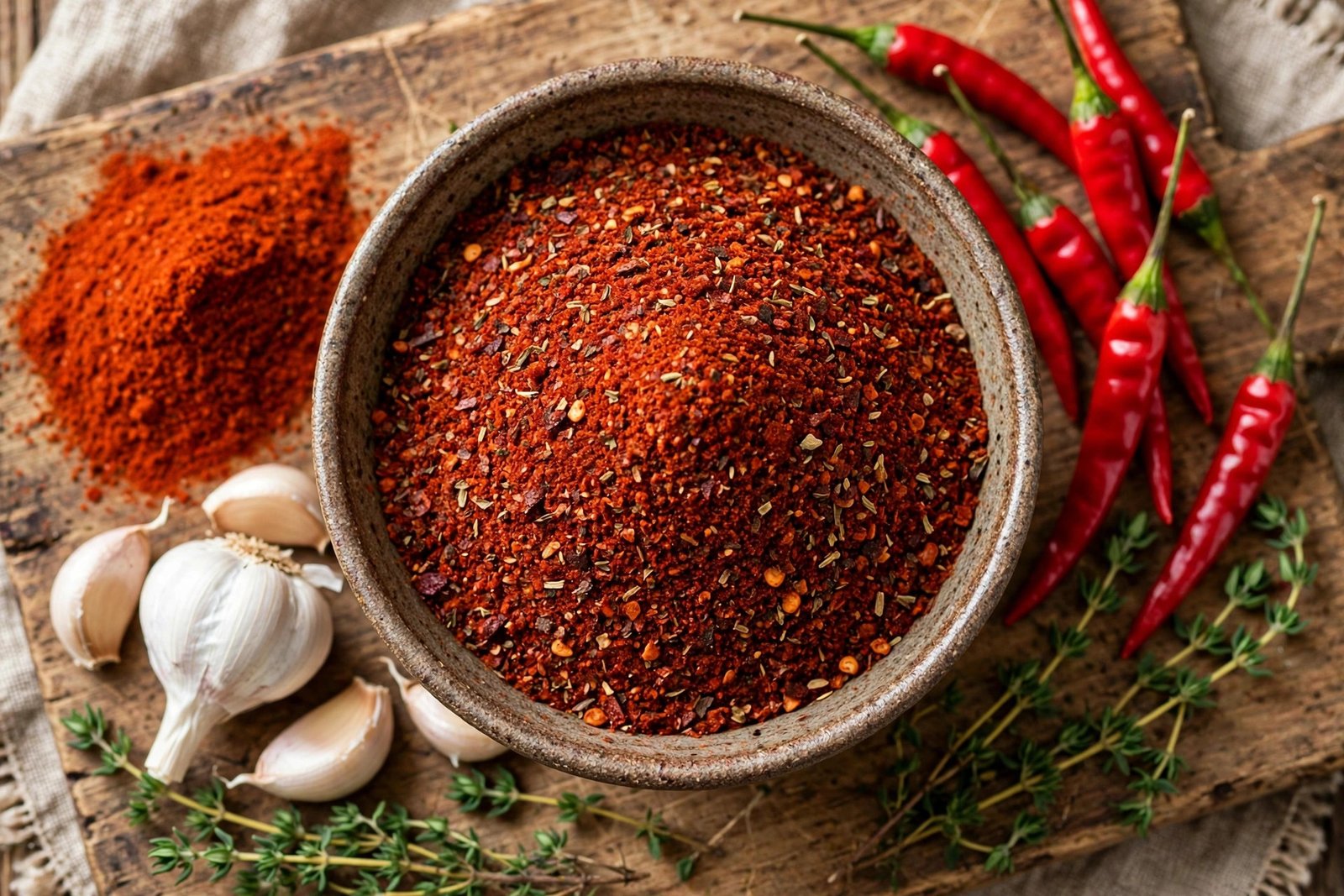
Cajun seasoning is the kind of blend that makes an ordinary weeknight dinner taste like you meant it. A spoonful over chicken thighs, a dusting on white fish before it hits a hot pan, or a generous shake through rice and peppers can turn simple ingredients into something warm, smoky and deeply savoury. It is bold without being complicated, and that is exactly why it has earned a permanent place in so many home kitchens.
Making your own cajun seasoning recipe at home is quick, inexpensive and far more flexible than buying a ready-made jar. You control the salt, you control the heat, and you can nudge the herbs up or down to suit your family. Once you have mixed one small batch, you will understand the balance well enough to make it your own, and you will probably stop buying the shop version altogether.
This guide walks through what goes into the blend, a clear parts-based recipe you can scale up or down, how to adjust it for different tastes, and plenty of ways to use it beyond the obvious chicken dinner. Keep a small jar near the stove and you will find excuses to use it all week.
What Cajun Seasoning Tastes Like
At its best, Cajun seasoning tastes warm, earthy and peppery, with a gentle smokiness underneath and a savoury backbone from garlic and onion. The paprika gives it colour and sweetness, the cayenne brings the heat, and dried thyme and oregano add a rustic, herbal note that stops the blend tasting one-dimensional. It should not taste only hot. Heat is part of the picture, but flavour comes first.
Think of the blend in layers. The first thing you notice is the rich red colour and the savoury aroma. Then comes warmth that builds slowly rather than shouting. Finally there is a faint herbal dryness that works beautifully against butter, oil and the natural sweetness of onions, peppers and sweetcorn. If you are still learning to judge warmth in a blend, our guide to understanding spice heat levels is a helpful place to start, because Cajun food is a perfect example of heat used as seasoning rather than as a challenge.
It also helps to know that Cajun seasoning is not the same as a generic spicy rub. A rub for slow cooking often leans heavily on sugar and salt. Cajun seasoning is drier, more herbal and more versatile. You can use a little as a finishing sprinkle, a lot as a coating for blackened fish, or stir it through a sauce without making everything taste sweet.
The Core Cajun Seasoning Recipe in Parts
Working in parts is the easiest way to make this blend at any size. A part can be a teaspoon for a tiny test batch, a tablespoon for a standard jar, or a quarter cup if you cook for a crowd. Keep the ratios the same and the flavour stays balanced.
The balanced everyday blend
- 3 parts paprika, sweet or a mix of sweet and smoked
- 1 part cayenne pepper, adjusted to taste
- 1 part garlic powder
- 1 part onion powder
- 1 part fine salt
- 1/2 part dried thyme
- 1/2 part dried oregano
- 1/2 part black pepper, freshly ground if possible
- 1/2 part white pepper, optional but traditional in many kitchens
For a standard small jar, use tablespoons as your part. That gives you three tablespoons of paprika, one tablespoon each of cayenne, garlic powder, onion powder and salt, and half a tablespoon each of thyme, oregano, black pepper and white pepper. Mix everything thoroughly in a dry bowl, breaking up any clumps in the garlic and onion powders, then transfer to a clean, dry jar.
The paprika you choose changes the result more than any other ingredient. Sweet paprika keeps the blend warm and rounded. Smoked paprika adds a deeper, wood-fire note that is lovely on chicken and potatoes. If you want to explore that choice, our smoked paprika guide explains when the smoky version shines and when it can take over. A half-and-half mix of sweet and smoked is a very good starting point for most cooks.
How to mix it well
Put all the ingredients in a bowl larger than you think you need and whisk or stir for a full minute. Ground spices clump and settle at different rates, so a quick shake in the jar is rarely enough for the first mix. If your garlic powder is lumpy, press it through a small sieve before mixing. Once combined, let the jar sit for a day before judging the flavour. The herbs settle in, the heat softens slightly, and the blend tastes more unified than it does straight after mixing.
Adjusting Heat, Salt and Herbs
The recipe above is a middle-of-the-road blend: warm, clearly spiced, but still family-friendly for most people. The beauty of a homemade mix is how easily you can move it in any direction with one small change at a time.
For less heat
Halve the cayenne to half a part and add an extra half part of paprika to keep the colour and volume. The blend stays flavourful because garlic, onion and herbs are still doing plenty of work. You can always add a pinch of cayenne or a dash of hot sauce at the table for those who want more, which is much easier than trying to cool down a dish that is already too fiery. If you do overshoot in a finished dish, our tips on fixing too much spice will help you rescue it with dairy, acidity or extra bulk ingredients.
For more heat
Raise the cayenne to one and a half parts and add a quarter part of chilli flakes for a slower, rougher heat. Taste carefully before going further. Remember that the blend will taste hotter on plain rice or grilled chicken than it does in a rich stew with butter and cream, so judge it in the kind of dish you cook most often.
Salt-free and low-salt versions
Leave the salt out entirely if you prefer to salt each dish separately. This is a smart approach if you use the blend on brined chicken, salted fish or shop-bought sausages, where hidden salt can quickly add up. A salt-free batch also works better as a table sprinkle, because everyone can season to their own taste. Just label the jar clearly so no one assumes it is the salted version.
Herb-forward versions
If you love the rustic side of the blend, raise the thyme to a full part and add a small pinch of dried sage or a bay leaf ground to powder. This version is wonderful on roast vegetables, bean stews and rice dishes where you want the herbs to come through clearly.
Best Ways to Use Cajun Seasoning
Cajun seasoning is famously versatile. The same jar can season a Monday chicken traybake, a Wednesday pot of rice and a Friday fish supper without any of them tasting repetitive, because the base ingredients change what the blend brings out.
Chicken
For chicken thighs or breasts, use about one tablespoon of blend per 500 grams of meat, plus a little oil to help it stick. Rub it in well, rest for at least twenty minutes if you have time, then roast, grill or pan-fry as usual. The paprika helps the surface colour beautifully, so keep an eye on thinner pieces in a very hot pan. Skin-on thighs are especially good: the seasoning sits in the rendered fat and turns deeply savoury.
Fish and seafood
For firm white fish, salmon or prawns, use a lighter hand, around two teaspoons per 500 grams, and cook quickly over fairly high heat. The classic blackened style uses a generous coating and a ripping-hot pan with butter, which gives a dark, flavourful crust. Work quickly, open a window, and do not walk away, because paprika-rich coatings move from deep mahogany to burnt in moments. A squeeze of lemon at the end lifts everything.
Rice, beans and vegetables
Stir one to two teaspoons into rice as it cooks, or fry the blend briefly in oil with onion and peppers before adding rice and stock for a simple, flavourful pilaf-style dish. It is also excellent on roast potatoes, sweet potato wedges, corn on the cob with butter, cauliflower florets and green beans. For beans and lentils, add it early so the spices have time to soften into the sauce, then taste again at the end.
If you enjoy this style of cooking, you will find plenty of overlap with our guide to spice rubs and marinades, where the same balance of salt, heat and aromatics is applied to longer marinades and slow-cooked dishes.
Storing Your Blend and Common Mistakes
Store your Cajun seasoning in a small, airtight jar in a cool, dark cupboard, away from the steam of the kettle and the heat of the hob. Label it with the date you mixed it and whether it is the salted or salt-free version. Ground blends are at their brightest in the first few months, so mix modest batches you will actually use rather than a huge jar that sits for a year.
A few common mistakes are easy to avoid. The first is using old, faded paprika as the base. Because paprika makes up the largest share, stale paprika means a dull blend no matter how fresh the other spices are. Rub a pinch between your fingers: it should smell sweet and fruity, not dusty. The second mistake is adding the blend too early to a very hot, dry pan with nothing else in it, which can scorch the garlic powder and turn it bitter. Add a little oil first, or add the seasoning with onions and peppers so it has moisture around it. The third mistake is forgetting that the blend already contains salt. Always taste a stew or sauce before adding extra salt at the end.
Finally, do not be afraid to keep notes. One line on the jar label, such as extra thyme, half cayenne, or smoked paprika batch, will save you guessing next time. Good home blends improve because the cook remembers what worked. After two or three batches, you will have a house version tuned exactly to your table, and that is the real reward of mixing your own.
Conclusion
A good cajun seasoning recipe is less about chasing an exact formula and more about balance: plenty of paprika for colour and sweetness, enough cayenne for warmth, savoury garlic and onion underneath, and herbs to keep it rustic. Mix a small batch in parts, adjust the heat and salt to suit your cooking, use it generously on chicken, fish, rice and vegetables, and store it cool and dark so it stays bright. Once that little jar is by your stove, weeknight cooking gets faster, bolder and a lot more fun.
Leave a Reply